

Jul 31, 2020
Technological Trends For Software Testing In 2017
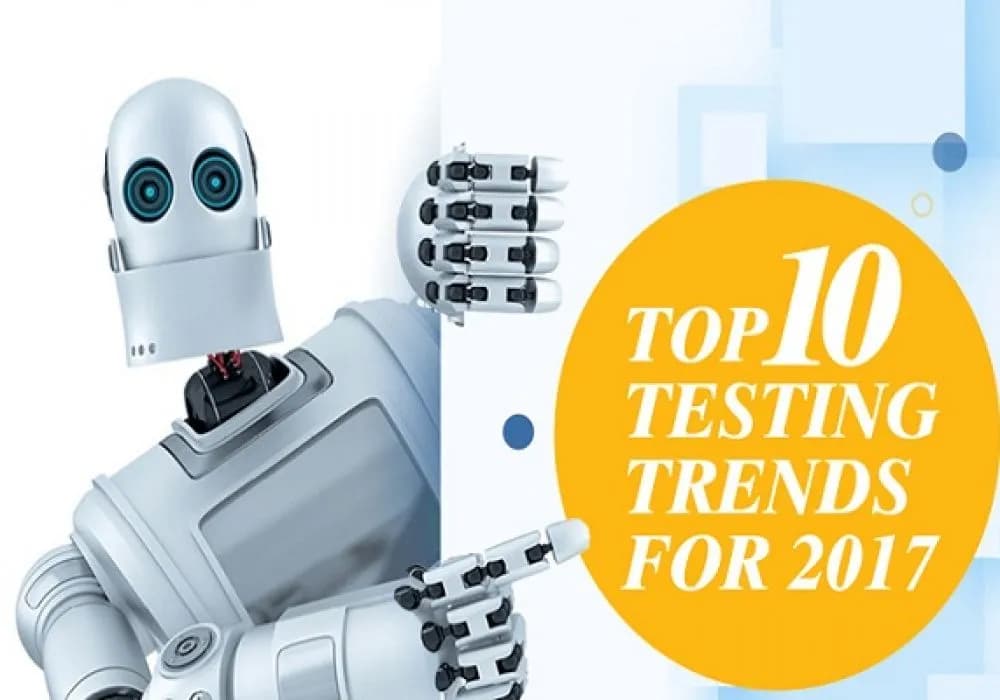
The year 2016 has witnessed a lot of technological trends in the field of Data and Security. It is not wrong to say that 2017 will take this game to the next level and reinforce a strong need for robust testing methods. Today, Testers and developers are increasingly collaborating in order to build flexibility and robustness in the development process. As we speak about software testing priorities for 2017, technology will be of prime importance. So, let’s delve deeper into the technology trends for 2017.
Top Technological Trends For Software Testing In 2017
1. Innovation in Open Source Platforms:
Open Source platforms have caught so much attention for the dynamic and active interface it offers and also for its cost-effectiveness. Due to the number of enterprises cutting down on their operational investments, open-source software is gaining popularity and will continue to offer an engaging platform for developers and testers.
2. Implementation of Smart Applications:
The sole purpose of using smart applications will be to cut down the infrastructure cost and boost efficiency which is a growing concern for enterprises. This will cover common security threats and power enterprise applications with artificial intelligence capabilities. These areas will evolve further and become a marketplace with interesting devices taking automation to the next level. The existing IoT devices will evolve further to become intelligent systems with AI-enabled feature. These systems will dominate your homes, workplaces, hospitals, retail outlets, and much more.
3. Test Automation:
Digital Transformation has set high standards for application development. Enterprises are experiencing the need to transform their heritage systems in order to cater for a large number of users. This demands continuous testing and validation to speed up the application development cycle and keep up the quality. New strategies, approaches and responsive test suites are needed by the businesses to build market-ready applications.
4. Continuous Integration:
Due to increased market challenges there is a strong need for faster software development lifecycles in order to gain speed to the market. For this, the developers and testers are collaborating and working in an agile setup. The software/Application development process will continue to define as there will be a constant need for reliable software. Automation helps fix bugs faster and continuous integration which in turn speeds up the SDLCs.
5. Security Testing:
Demand for security testing professionals in the year 2016 has increased tremendously as it has witnessed financial hacks and major data breaches. The complexity of applications and digital technologies pose security challenges that make security testing an indispensable aspect in SDLCs. Application security will continue to be a priority for enterprises in this era. So, there is a need for a potential blend of manual and automated code analysis, penetration testing, dynamic and static security testing.
6. Big Data Testing:
In 2017, it is expected that innovations and industries will be driven by Data as all the decision making is going to get concentrated on big data analytics. Testing the Performance and functionality of Big Data will get critical. Enterprises are exploring Big Data for deriving logical patterns and so it is going to gain more popularity in the coming future.
7. Virtual Reality:
Virtual Reality has transformed the ways of communication globally. Today, it is not just used for infotainment purposes but also leveraged for a larger cause globally. Many countries are using it to present their global activities to corporates, raise funds and to drive much-needed attention. For instance, United Nations is using Virtual Reality to showcase its global activities to corporates and philanthropists, raise funds and drive the much-needed attention.
8. IoT, AI (Artificial intelligence) and Smart Thing:
Smart things’ reminds of robots and other unmanned machinery. IoT is all about robust solutions. Developers, Architects, Business analysts and Security experts need to work together to find ways to integrate all the components. This, in turn, will directly affect the testing requirements.
9. Artificial Intelligence:
AI has been tremendously used across the healthcare and medicine sectors. It includes deep learning, neural networks, and language processing. It further comprises advanced systems that operate independently. These systems are capable of learning and determining future behaviour. AI will be widely used to develop intelligent devices and programs. Its application will keep on growing across all the critical sectors.
10. Testing of Mobility Services/Devices:
Mobility services act as a key factor for both individual as well as enterprise applications. With the popularity of m-commerce and m-wallets, a constant demand for Mobile testing will be there. Various testing mechanism combinations will be devised to meet the vast and challenging needs of mobility services.

Kanika Vatsyayan
Automation & Manual Testing, QA Delivery & Strategy
About the Author
Kanika Vatsyayan is Vice-President – Delivery and Operations at BugRaptors who oversees all the quality control and assurance strategies for client engagements. She loves to share her knowledge with others through blogging. Being a voracious blogger, she published countless informative blogs to educate audience about automation and manual testing.


