

May 21, 2026
GitHub Investigates Internal Repository Breach Following TeamPCP Supply Chain Incident
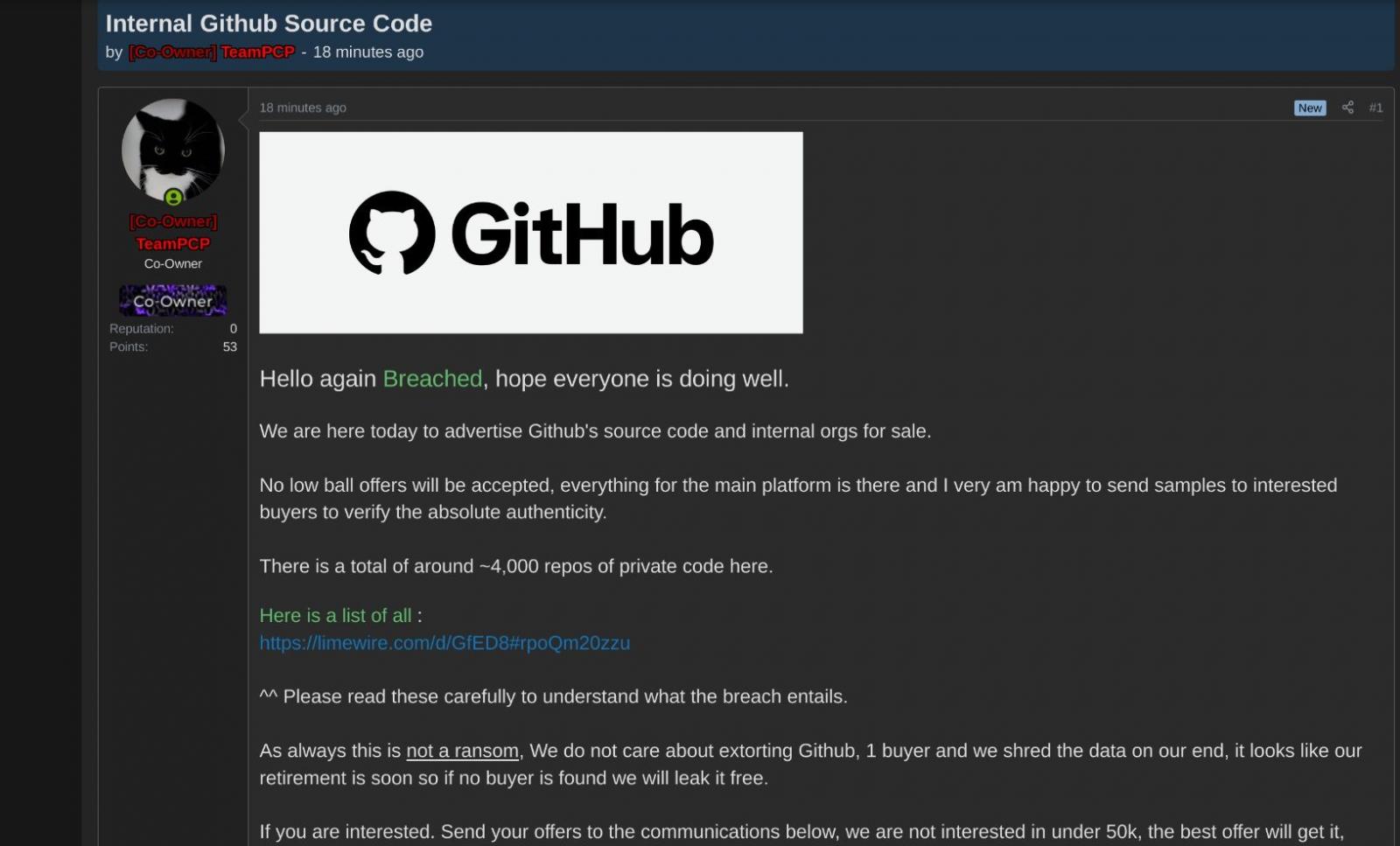
The tech world woke up to a major shock when a notorious hacking group, TeamPCP, claimed it had broken into GitHub’s internal systems. The group is currently selling access to roughly 4,000 of GitHub's private code repositories on cybercrime forums, demanding a massive $50,000 ransom.
If GitHub, the platform holding the code for 100 million developers worldwide, can get hacked through a single employee's workstation, what does that mean for your business? Well, the threat is real, and it highlights a massive gap in modern software security. To stop these hidden threats, engineering teams are turning to DevSecOps testing services to check for security flaws every time code is written or updated.
Now, let’s understand how this hacking group was able to break into GitHub’s internal systems.
The Traphole: A Poisoned Coding Tool
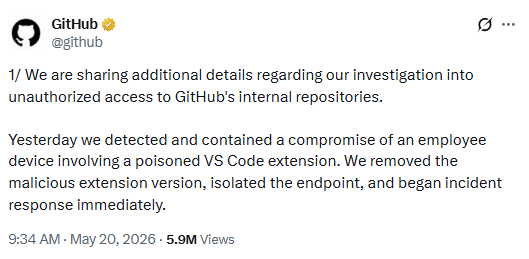
This breach did not happen because of a massive system failure; it started with a single, simple mistake. A GitHub employee downloaded a poisoned extension for Microsoft Visual Studio (VS) Code, a tool that almost every developer uses daily.
Malicious extensions are incredibly dangerous. Once installed on a developer's computer, they secretly steal passwords, access keys, and digital tokens. TeamPCP used these stolen access tokens to walk right past GitHub's perimeter defenses and copy their internal code. The best way to catch these weak spots before hackers do is by using professional penetration testing services to simulate real-world attacks on developer setups.
GitHub quickly released an official statement to explain what happened:
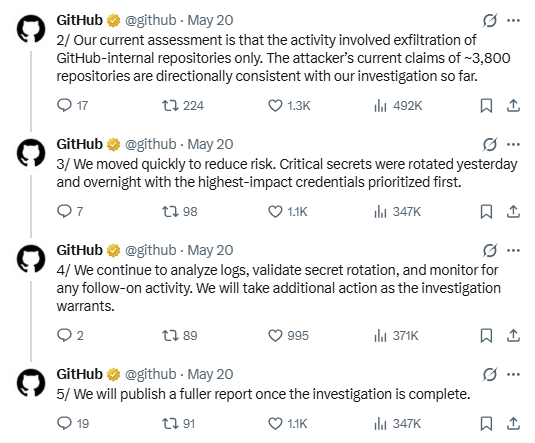
While GitHub claims that customer accounts and data are safe, the hackers now hold the blueprints to GitHub's internal tools.
Why This Matters to Your Business
Even if your own code was not stolen in this specific breach, the fallout could still hit your company. Hackers can study GitHub's stolen internal data to find new software bugs or plan smart phishing attacks against businesses that rely on the platform.
To stay safe, companies must stop blindly trusting third-party tools. Running regular security regression testing ensures that whenever software is updated or passwords are changed, old security holes are not accidentally reopened.
At the same time, companies should use intelligent code review tools. These systems scan your software automatically to find hidden passwords, accidental leaks, or dangerous pieces of code before they cause damage.
Lock Down Your Pipeline with BugRaptors
This incident is a wake-up call. When a malicious tool gets onto a developer's computer, human eyes cannot always spot the danger. That is where continuous protection comes in. By using automated testing services, your team can scan local coding environments and delivery systems 24/7, blocking dangerous changes instantly.
BugRaptors specializes in setting up these exact security shields to find third-party risks before hackers can exploit them. Our QA engineers look closely at how your software is built, check who has access to your systems, and monitor developer tools for suspicious activity.
Do not wait for a third-party tool to compromise your security. Partner with BugRaptors today for complete QA testing and DevOps pipeline validation to secure your business against modern cyber threats.

Tushar Kashyap
Security Testing
About the Author
Tushar Kashyap, Security Testing Manager at BugRaptors, brings over 14 years of extensive experience in Security testing. Holding Multiple security certifications, Tushar has a diverse testing background, having contributed to projects across various domains. His experience spans both outsourced and insourced projects, showcasing his versatility in adapting testing methodologies to different environments. His leadership ensures the seamless implementation of robust security measures, contributing significantly to the success and integrity of projects across different domains and project structures.


